World Cup 2026 Ticket Controversy Explained: Pricing, Backlash, and Investigations
The 2026 FIFA World Cup is the biggest football tournament in history. It features 48 teams, 104 matches, and three host nations. It should be a celebration. Instead, it has become one of the most controversial ticketing stories the sport has ever seen.
The World Cup 2026 ticket controversy has sparked global outrage from fans, official investigations from multiple US state attorneys general, a congressional letter signed by 69 lawmakers, and a formal complaint filed with the European Commission. The fury is about more than just high prices — it involves dynamic pricing, a resale platform that charges fans on both ends of every transaction, seat maps that were changed after tickets were sold, and thousands of tickets that disappeared from official channels only to reappear on resale sites.
This article explains every layer of the controversy — in plain language — so you can understand what happened, why fans are furious, and where things stand right now.
What Is the World Cup 2026 Ticket Controversy?
At its core, this is a dispute between FIFA and football fans over how World Cup tickets have been priced, sold, and managed.
For the first time in World Cup history, FIFA has:
- Used dynamic pricing — a model where ticket prices rise and fall based on real-time demand
- Operated an official resale marketplace where it takes a 30% cut from every transaction
- Changed stadium seating zone maps after fans had already purchased tickets
- Set price points for some seats far above any previous World Cup
- Projected $3 billion in ticket revenue — accounting for roughly 27% of the tournament’s total projected $11 billion income, compared to the historical norm of 10–15%
The result has been an avalanche of complaints, legal action, and political pressure that has followed the tournament into its opening days.
How Much Do World Cup 2026 Tickets Actually Cost?
The prices are, in many cases, eye-watering. Here is a breakdown.
Group Stage Ticket Prices
When FIFA’s main ticketing phase opened following the tournament draw, ticket prices for group stage matches ranged from $120 to $700 depending on the category and the match. The German Football Association shared pricing data showing prices of $180 to $700 for various group games.
In response to intense backlash, FIFA introduced a limited new “Supporter Entry Tier” at $60 per ticket for all 104 matches. However, this tier is allocated through national federations for distribution to their most loyal fans — and the number of tickets available at this price for each match is believed to be in the hundreds, not thousands.
Final Ticket Prices
The World Cup Final at MetLife Stadium in New Jersey has seen the steepest prices:
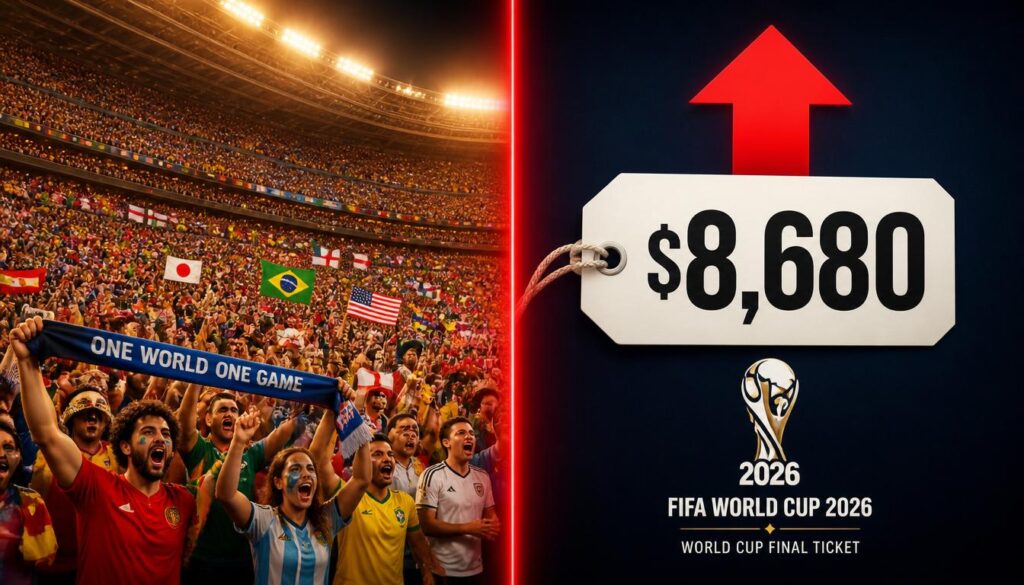
- When FIFA first sold final tickets after the December draw, the top price was $8,680
- In April, FIFA raised the top price to $10,990 during the next sales window
- On the official resale platform, a front-row seat in the lower bowl has reached over $32,970
- At the extreme end, four final tickets were listed on the resale market for nearly $2.3 million each
How 2026 Prices Compare to Previous World Cups
The price inflation becomes clearest when you compare 2026 with previous tournaments:
| Tournament | Cheapest Group Stage Ticket | Most Expensive Final Ticket |
|---|---|---|
| USA 1994 | ~$25 | ~$475 |
| Qatar 2022 | ~$70 | ~$1,600 |
| USA/Canada/Mexico 2026 | ~$60 (restricted tier) / $120+ (general) | ~$10,990 (face value) / $32,970+ (resale) |
In adjusted terms, the cheapest group-stage seats in 2026 cost twice as much as Qatar 2022 and roughly four times more than the last time the United States hosted a World Cup in 1994. In some categories, prices are five times higher than in Qatar.
What Is Dynamic Pricing — And Why Are Fans Angry About It?
Dynamic pricing is a model familiar to concert-goers and airline passengers in the United States. It allows prices to change based on real-time factors: demand, remaining inventory, how close a match is, how popular the teams involved are.
FIFA used dynamic pricing for the very first time at a World Cup in 2026.
For fans accustomed to flat-rate World Cup tickets—where a seat cost the same on day one as it did a month later—the model has been deeply unsettling. Here is why:
- Prices for the three main ticket categories rose on average by 34% between October 2025 and April 2026
- A seat at the final was initially sold at $6,730. By the next pricing window, an equivalent seat had reached $10,990 — a price rise of more than $4,000 for the same product
- Prices fluctuate without warning, making it impossible for fans to plan ahead with any certainty
- A letter to FIFA signed by 69 members of the US Congress described the model as turning the World Cup into “an exclusionary, profit-driven enterprise at the direct expense of fans, host communities, and public taxpayers”
- Two members of Congress separately called the practice “dynamic pricing rip-offs” in written correspondence to FIFA president Gianni Infantino
Football Supporters Europe (FSE) had already declared in December 2025 that the pricing represented “a monumental betrayal of the tradition of the World Cup.”
The Resale Platform: FIFA’s 30% Cut
Alongside dynamic pricing on its official ticket portal, FIFA has launched its own official ticket resale marketplace — a first for the tournament.
The mechanics are contentious:
- FIFA charges a 15% transaction fee from both the buyer and the seller on every resale
- This means 30% of every resale transaction goes directly to FIFA
- In the United States and Canada, FIFA has reportedly abandoned resale price caps — meaning sellers can list tickets at any price the market will bear
- Mexico operates under stricter resale regulations, so different rules apply there
- The governing body has defended this approach by arguing that price caps would simply push sellers onto unregulated third-party platforms like StubHub
For fans, the outcome is a system where FIFA profits not once but twice: on the original sale and again on every resale. Fan organisations have argued this gives FIFA a financial incentive to keep face-value prices high while benefiting from an inflated secondary market.
World Cup 2026 travel guide for fans
The Seat Map Scandal: Fans Who Got Less Than They Paid For
Beyond the headline prices, a separate and arguably more troubling issue emerged around stadium seating maps.
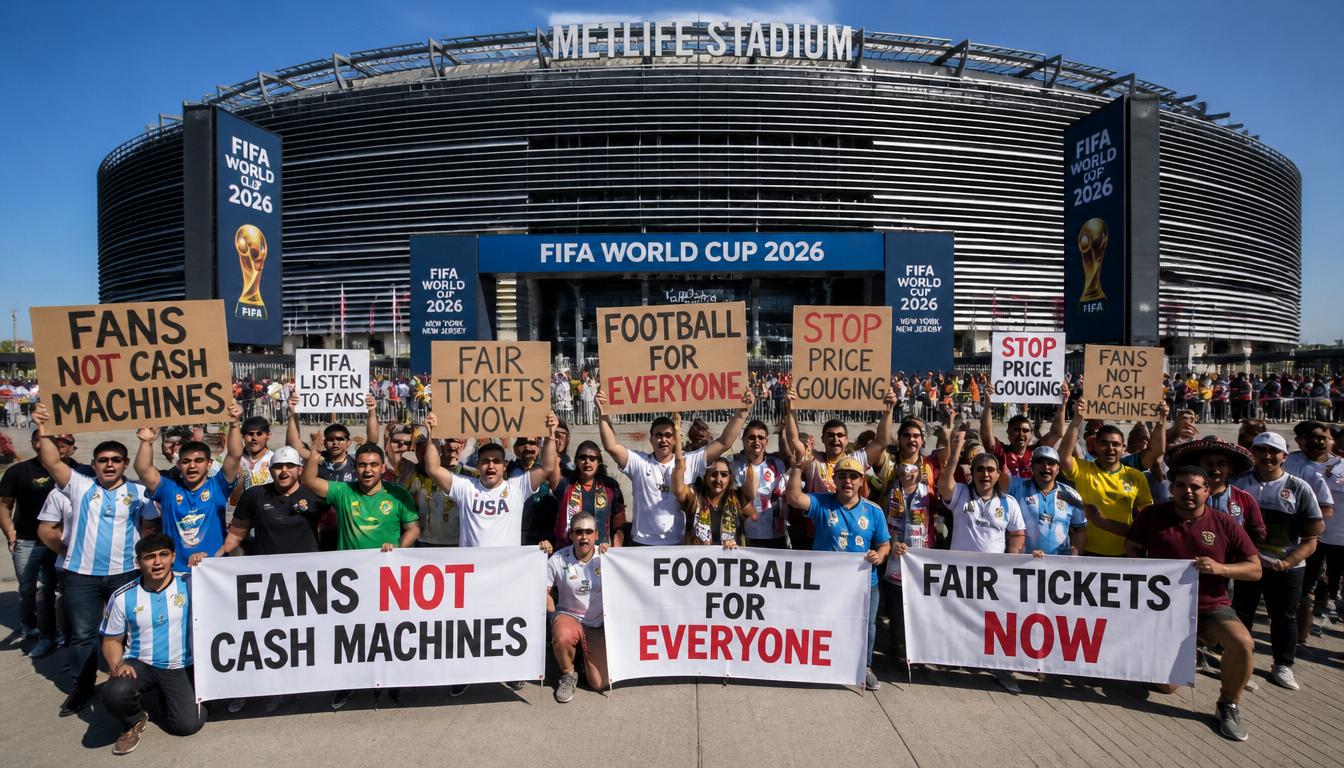
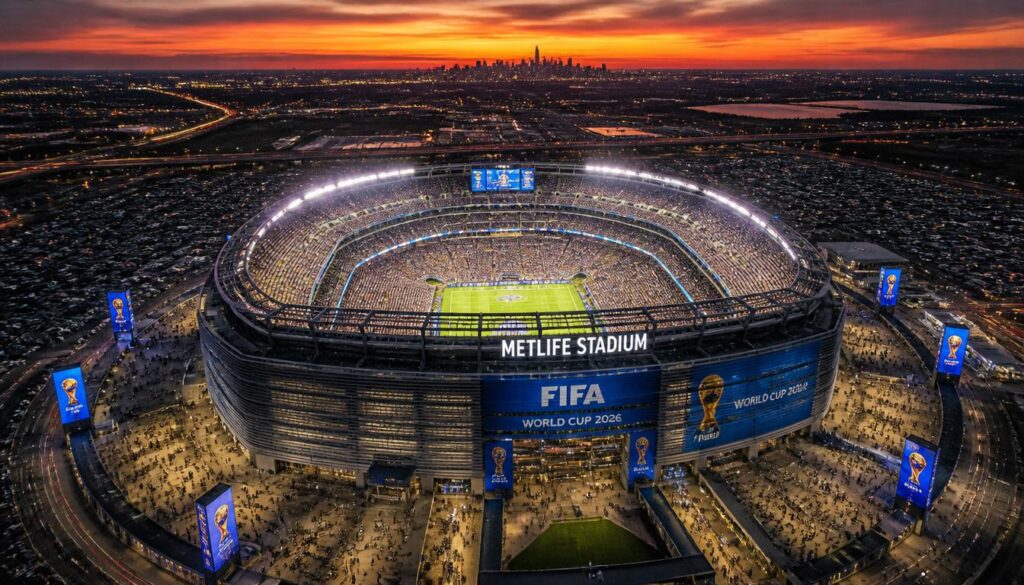
At MetLife Stadium — where the final and seven other matches are being held — fans reported that FIFA changed the stadium zone maps after tickets had already been sold.
Here is what happened, according to investigators:
- The stadium was originally divided into four categories, with lower-numbered categories in more desirable positions
- After ticket sales began, FIFA created new zones and added a front section inside each original category
- Fans who had purchased tickets for what they believed were premium zones found themselves reassigned to less desirable seats — further from the pitch, or behind the goals
- One FC Dallas fan who purchased “Tier Two” tickets expecting a premium view at AT&T Stadium was assigned seats on the fourth level of the stadium. “I feel like we got scammed,” he told local media. “Soccer is about the fans — that is not fan friendly.”
FIFA’s official defence was that its seating category maps “were designed to provide guidance rather than the exact seat layout” — a statement that has done little to satisfy affected fans.
The Tickets That Vanished
One of the most striking episodes in the controversy came in late May 2026, when approximately 44,000 tickets disappeared from FIFA’s official portal — dropping available inventory from over 70,000 to under 30,000 almost overnight.
Those same tickets subsequently appeared on the official resale marketplace.
Analysis by independent observers suggested FIFA may have moved inventory from its fixed-price channel to the resale platform where prices — and FIFA’s own percentage cut — would be higher. One expert argued the organisation had a financial incentive to do this precisely because reducing official prices could “trigger refund demands, chargebacks, or consumer-protection headaches from fans who already bought at much higher prices.”
FIFA has not formally commented on whether it deliberately rerouted this inventory. The matter is now part of active legal investigations.
Official Investigations: Who Is Looking Into FIFA?
The scale of the legal and political response to the World Cup 2026 ticket controversy is unprecedented for a sporting event.
New York and New Jersey
In late May 2026, New York Attorney General Letitia James and New Jersey Attorney General Jennifer Davenport jointly issued subpoenas to FIFA, demanding internal documents about ticketing practices at MetLife Stadium — including how tickets were allocated, how the seat maps were structured, and how pricing decisions were made.
“FIFA has turned buying a ticket to the World Cup into a gauntlet of confusion, fake scarcity, and impossibly high prices — all at the expense of consumers and hardworking New Jerseyans,” said Davenport.
The subpoena formally investigates whether FIFA’s conduct around ticket releases and public statements contributed to “soaring prices.”
Texas
Texas Attorney General Ken Paxton launched a parallel investigation into whether FIFA violated the Texas Deceptive Trade Practices Act through misleading seat maps and unfair pricing at matches in Dallas (AT&T Stadium, which is hosting the most games of any venue — nine matches) and Houston.
California
California Attorney General Rob Bonta sent a formal letter to FIFA raising concerns about “potentially misleading ticketing practices” for matches at SoFi Stadium in Inglewood and Levi’s Stadium in Santa Clara.
US Congress
A letter organised by Representative Sydney Kamlager-Dove and signed by a total of 69 members of Congress was sent to Infantino in March 2026, demanding FIFA take “immediate corrective action” and end dynamic pricing. The letter specifically noted that FIFA had promised hundreds of thousands of low-cost tickets when bidding for the tournament in 2018 — a commitment it has not delivered.
Two separate members of Congress followed up with direct correspondence calling the practices “dynamic pricing ripoffs” and “misleading seat maps.”
European Commission
Fan organisation Football Supporters Europe (FSE) and consumer group Euroconsumers filed a formal complaint with the European Commission against FIFA’s ticketing practices.
“FIFA holds a monopoly over ticket sales for the 2026 World Cup and has used that power to impose conditions on fans that would never be acceptable in a competitive market,” the groups said in a joint statement.
How Did FIFA and Gianni Infantino Respond?
FIFA’s response to the controversy has been a mixture of limited concessions, public dismissal, and firm defence of its approach.
The $60 concession: In response to the initial backlash, FIFA introduced the “Supporter Entry Tier” — a fixed price of $60 per ticket for all 104 matches, allocated through national federations for loyal fans. Supporter groups welcomed the gesture but described the number of tickets available at that price as far too low to make a meaningful difference.
Infantino’s demand defence: Speaking at the World Sports Summit in Dubai, Infantino pointed to extraordinary demand as justification. “We have six to seven million tickets on sale. And in 15 days we received 150 million ticket requests — 10 million requests every single day. In the almost 100 years of the World Cup, FIFA has sold 44 million tickets in total. So, in two weeks we could have filled 300 years of World Cups. Imagine that. This is absolutely crazy,” he said.
The hot dog moment: When asked about reports of Final tickets being listed at nearly $2.3 million each, Infantino dismissed the figures as outliers. He promised to personally deliver a hot dog to anyone who actually paid $2.3 million for a seat. His point — that lower-cost options existed nearby — was technically accurate, but the response drew widespread criticism for trivialising the broader concerns.
On the market rates argument: Infantino has repeatedly argued that FIFA must “apply market rates” in the US entertainment market. FIFA has also stated that as a not-for-profit organisation, all revenue is reinvested into football development globally.
What Did Supporter Groups Say?
Fan organisations globally have been among the most vocal critics of the FIFA ticket pricing controversy.
- Football Supporters Europe (FSE): Called prices “extortionate.” Described the situation as “a monumental betrayal of the tradition of the World Cup.” Welcomed the $60 tier but said the changes “do not go far enough to reconcile.” Also criticised the absence of any pricing provision for disabled fans.
- Football Supporters’ Association (UK): Branded the original pricing “scandalous” and “a laughable insult” to the average fan.
- Scottish Football Supporters Association (SFSA): Highlighted that some 2026 prices were “five times the cost in Qatar” and urged FIFA to rethink.
- Football Supporters Europe + Euroconsumers: Filed a joint complaint to the European Commission, accusing FIFA of operating a monopoly.
Political figures also weighed in. New York City mayoral candidate Zohran Mamdani launched a petition titled “Game Over Greed,” calling on FIFA to end dynamic pricing, cap resale prices, and reserve 15% of tickets in each host city for local residents — a provision that was standard practice at previous World Cups.
6. EXPLAINER BOX — “Why This Matters” (For Casual Readers)
🟡 The World Cup 2026 Ticket Controversy — In Simple Terms
Not sure what all the fuss is about? Here are the five things you need to know:
- Prices are far higher than any previous World Cup. Group stage seats start in the hundreds of dollars and Final tickets cost thousands — in some cases five times more than the 2022 Qatar World Cup.
- FIFA used “dynamic pricing” for the first time — meaning prices automatically increased as demand grew. Tickets rose by an average of 34% between October 2025 and April 2026.
- FIFA takes a 30% cut from every resale transaction. Fans who want to sell their tickets face fees on both ends of the deal — and there are no official resale price caps in the US or Canada.
- Some fans ended up with worse seats than they paid for. FIFA changed stadium seating maps after tickets were sold, leaving buyers in lesser positions than advertised.
- Multiple US states and lawmakers are now investigating FIFA. New York, New Jersey, Texas, and California have all launched probes. Sixty-nine members of Congress wrote to FIFA demanding action.
What Does This Mean for Ordinary Fans Now?
The controversy has had real consequences on the ground — and the tournament has only just kicked off.
Empty seats in some venues. The aggressive pricing strategy has reportedly left noticeable unsold inventory in some group stage fixtures, particularly in cities where local football culture is less established.
The $60 tier exists — but supply is tiny. FIFA’s concession of $60 tickets is real, but the number available per match is believed to be in the hundreds rather than thousands, and they are distributed through national federations, not directly to the public.
Last-minute options may exist. Keep checking Ticketmaster’s official World Cup 2026 page for any last-minute releases. Some group stage games in less high-profile cities have had availability during the tournament itself.
Legal consequences may follow the tournament. Experts have noted that potential class-action lawsuits from fans and ongoing attorney general investigations could keep FIFA busy long after the final whistle. However, with the projected $11 billion in revenue, any financial impact on FIFA from legal proceedings is expected to be limited.
The fundamental question remains unanswered. At the heart of this controversy is a debate about what the World Cup is for — and who it belongs to. FIFA argues it is a commercial event operating in a commercial market. Fans, supporter groups, and a growing number of politicians argue it is a public cultural institution that should be accessible to ordinary people. That argument will continue well beyond July 19.
-
Why is World Cup 2026 ticket pricing controversial?
FIFA introduced dynamic pricing for the first time in World Cup history, allowing prices to automatically increase based on demand. Ticket prices for the three main categories rose by an average of 34% between October 2025 and April 2026. Combined with a resale platform that takes 30% of every transaction and allegations that fans were given worse seats than advertised, the overall situation has triggered investigations by multiple US state attorneys general, a 69-member congressional letter, and a formal complaint to the European Commission.
-
Are World Cup 2026 tickets more expensive than previous World Cups?
Yes, significantly. When the USA last hosted the World Cup in 1994, tickets ranged from $25 to $475. At Qatar 2022, prices ranged from around $70 to $1,600 for the final. In 2026, general group stage seats start at around $120 to $180 and Final tickets on the official platform have reached $10,990 face value — with resale prices going far higher. In many categories, 2026 World Cup tickets are five times more expensive than Qatar 2022.
-
What is dynamic pricing for World Cup 2026 tickets?
Dynamic pricing is a system where ticket prices change in real time based on demand, inventory levels, and the popularity of specific matches. FIFA used this model at a World Cup for the first time in 2026. As demand surged, prices for the same seat categories increased — sometimes significantly. A Final ticket that started at $6,730 rose to $10,990 in the next pricing window. Critics argue this makes the World Cup 2026 ticket pricing unpredictable, unfair, and fundamentally inaccessible for ordinary fans.
-
Did FIFA respond to the World Cup 2026 ticket backlash?
Yes, though the response has been widely described as insufficient. FIFA introduced a limited “Supporter Entry Tier” of $60 tickets for all 104 matches, distributed through national federations to loyal fans. However, the number of tickets available at this price is believed to be in the hundreds per game. FIFA president Gianni Infantino has defended the pricing by citing record demand — 150 million ticket requests in 15 days — and argued that FIFA must apply market rates in the US entertainment market.
-
Can ordinary fans still buy affordable tickets for World Cup 2026?
Options are limited but not entirely absent. The $60 Supporter Entry Tier exists but is allocated by national federations and available in very limited numbers. Some group stage matches in less high-profile host cities have had last-minute availability. Fans should check the official FIFA ticket portal and Ticketmaster’s World Cup 2026 page for any releases. Attending official fan zones — which are free to enter in all 16 host cities — remains a genuine alternative for fans priced out of stadiums.
-
What is the FIFA official resale platform, and why is it controversial?
FIFA launched its own official resale marketplace for the 2026 World Cup, allowing ticket holders to resell tickets they have already purchased. The controversy lies in the fees: FIFA charges 15% from both the buyer and seller on every resale transaction — effectively a 30% total cut. In the USA and Canada, there are no official price caps on resale listings, meaning some Final tickets have appeared at tens of thousands of dollars. Fan groups argue this turns FIFA into a direct beneficiary of ticket speculation.
-
Who is investigating FIFA over World Cup 2026 ticket prices?
Multiple official bodies have launched investigations. The attorneys general of New York, New Jersey, Texas, and California have all opened probes or issued formal requests for information, citing concerns about misleading seat maps, artificial price inflation, and deceptive trade practices. 69 US members of Congress signed a letter demanding FIFA end dynamic pricing. Fan organisations Football Supporters Europe and Euroconsumers filed a formal complaint with the European Commission. Several legal experts have also raised the question of whether FIFA’s monopoly over ticket sales amounts to an antitrust issue under US law.