
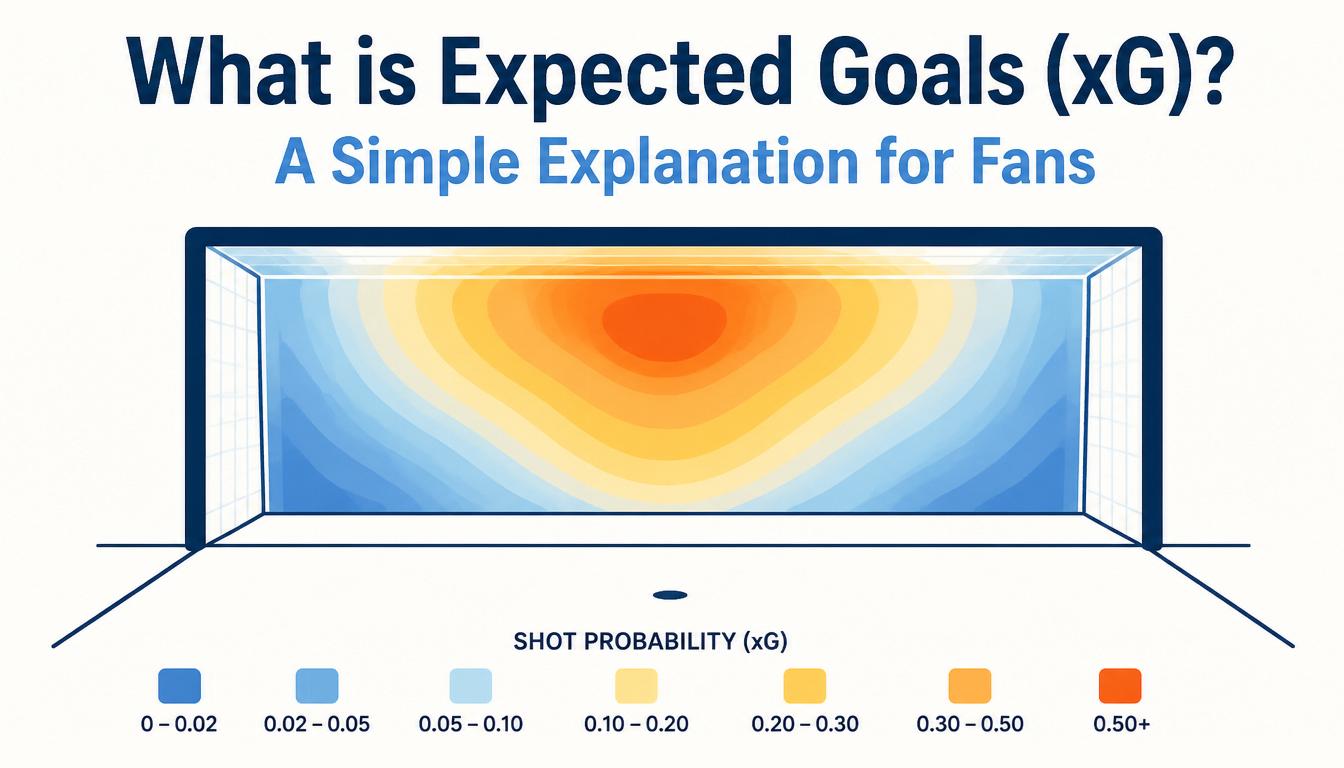
What is Expected Goals (xG)? A Simple Explanation for Fans
If you’ve watched football recently, you’ve probably seen a strange stat pop up next to the score: xG. Commentators throw it around like everyone already understands it, but for many fans, it’s still a mystery.
This guide has expected goals (xG) explained in the simplest way possible, using real examples instead of confusing math. It’s written for everyday fans, not analysts or coaches.
By the end, you’ll know what xG means, how it’s calculated, why it matters, and how to use it to understand matches better. Note that this is a beginner-friendly explainer, not an official technical rulebook.
What Does xG Actually Mean?
Expected Goals (xG) measures the quality of a scoring chance, not the result. It answers one simple question: how likely was this shot to result in a goal?
Every shot gets a value between 0 and 1. A tap-in from one yard out might be rated 0.95 (very likely to score). A wild shot from 35 yards might be rated 0.02 (very unlikely).
So instead of just counting goals, xG counts the quality of chances a team created.
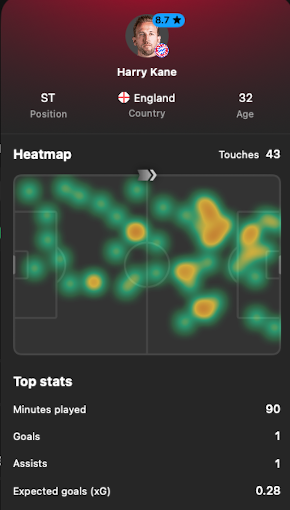
How is xG Calculated?
xG models look at thousands of past shots with similar characteristics and calculate how often they resulted in goals. Key factors include:
- Distance from goal
- Shooting angle
- Type of assist (through ball, cross, rebound)
- Whether it’s a header or a foot shot
- Defensive pressure at the moment of the shot
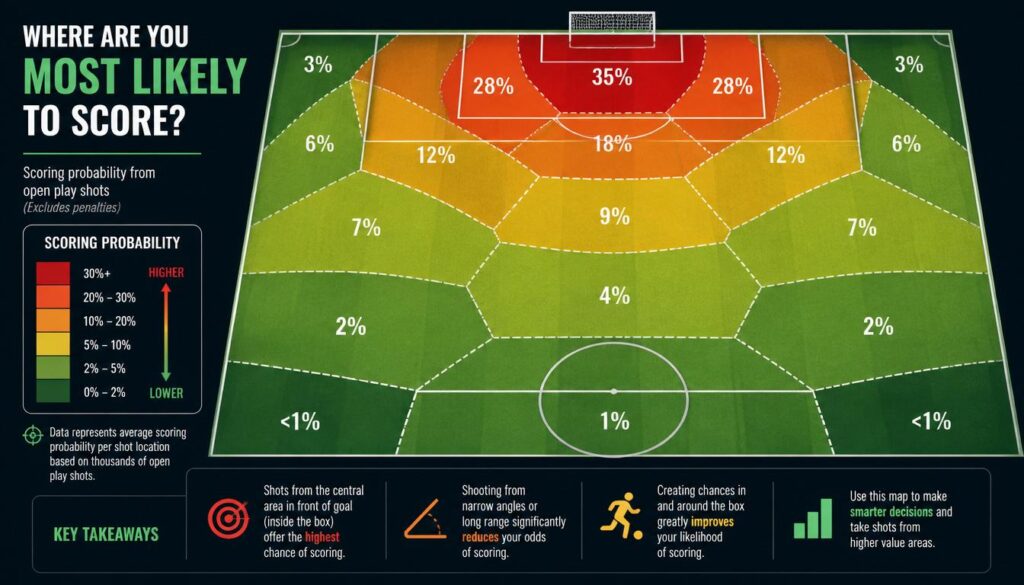
If shots from a similar position and situation scored 30% of the time historically, that shot gets an xG value of 0.3.
Why Does xG Matter for Fans?
xG helps answer a question the scoreboard can’t: who actually played better?
A team can win 1-0 while creating poor chances, and still have a lower xG than the team that lost. This usually signals they got lucky, or the goalkeeper had a poor game.
Over a full season, xG is a strong indicator of whether a team’s results match their actual performance or whether they’re overperforming/underperforming.
Common xG Examples
Here’s how xG plays out in real scenarios:
- Penalty kick: xG of about 0.76, since penalties are scored roughly 76% of the time
- Close-range tap-in: xG of 0.90+
- Long-range strike: xG of 0.03–0.08
- One-on-one with the goalkeeper: xG of 0.30–0.45, depending on angle
A player who scores from a 0.05 xG chance has scored a “worldie.” A player who misses a 0.85 xG chance has missed a “sitter.”
Limitations of xG
xG is useful, but it isn’t perfect. It’s important to understand what it doesn’t measure:
- It doesn’t account for shot placement or power
- It can’t measure goalkeeper quality directly
- It doesn’t capture individual skill or composure
- It’s a statistical estimate, not a guarantee
Think of xG as a helpful guide to chance quality, not an exact predictor of what will happen.
Also read: How to Predict a Football Match Results: 6 Factors That Matter
Final Thoughts
Expected Goals (xG) is one of the easiest advanced stats for fans to pick up. In short, it measures how good a scoring chance was, not whether it resulted in a goal.
Next time you see xG on a broadcast, you’ll know exactly what it means, and you’ll be able to spot when a team deserved more (or less) than the final score suggests.
What does xG mean in football?
xG stands for Expected Goals. It measures the quality of a scoring chance based on factors like distance, angle, and shot type, rather than whether the shot actually scored.
Is a higher xG always better?
Generally yes. A higher xG means a team created better-quality chances. However, results still depend on finishing and goalkeeping.
Can xG predict the final score?
No. xG estimates chance quality, not certainty. A team can dominate on xG and still lose the match.
What is a good xG value for a shot?
Anything above 0.3 is considered a good chance. Values above 0.7 are very high-quality opportunities, like close-range shots or penalties.
Why do commentators use xG so much now?
Because with expected goals (xG) explained clearly, fans and analysts get a better sense of performance quality, not just the final score.
Does xG replace goals as a stat?
No. xG works alongside goals, not instead of them. Goals show results; xG shows performance quality.